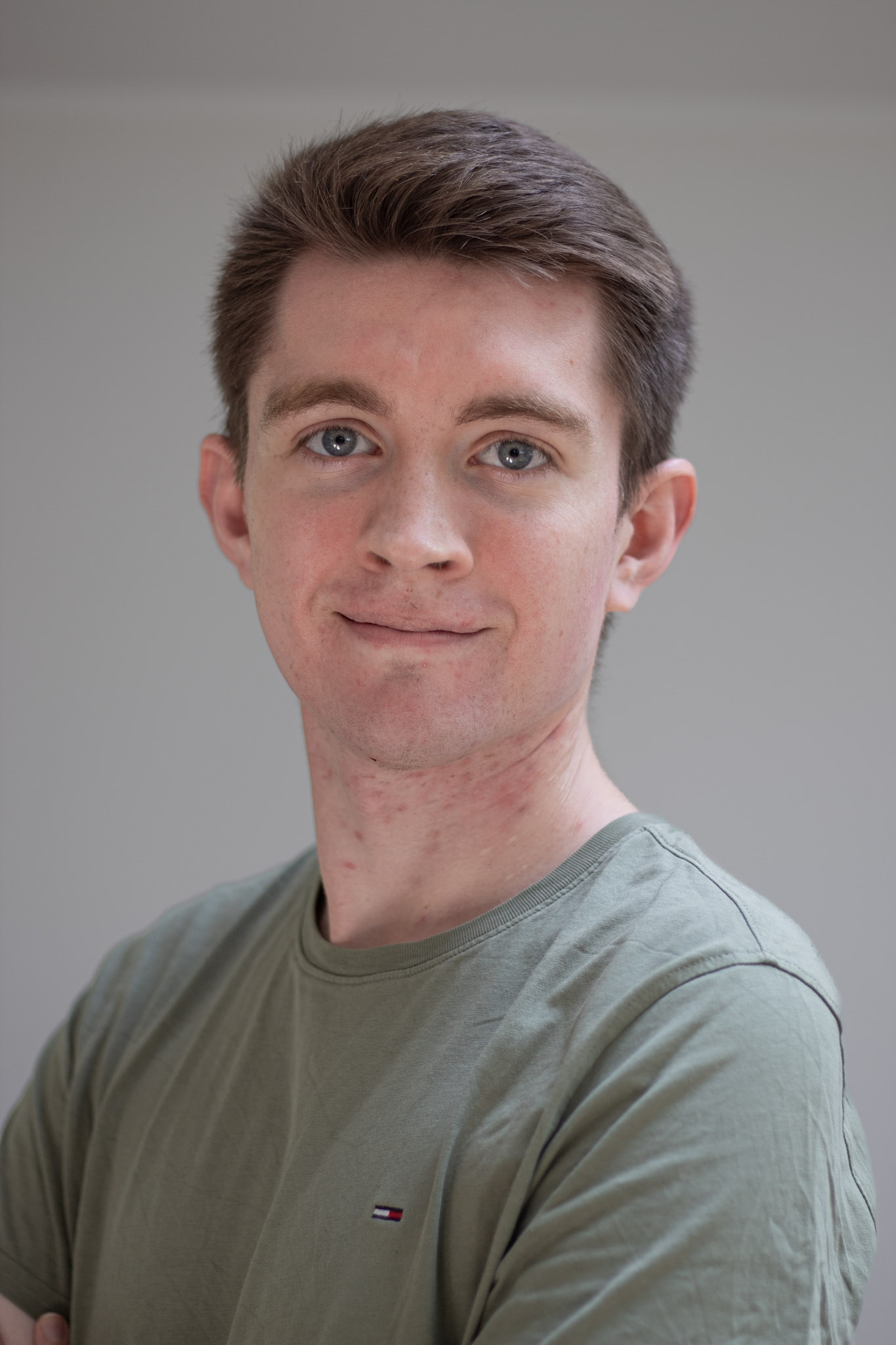
Hi, I’m Morten Møller Christensen.
I’m a Machine Learning engineer with an MSc in Mathematical Modelling and Computation
from the Technical University of Denmark (DTU).
I work primarily with machine learning for imagery and geospatial data, building
practical models and reproducible pipelines for tasks such as satellite image
segmentation and spatial post-processing.
Alongside my academic background, I have industry experience from a student position
developing e.g. .NET APIs and data workflows for enterprise systems.
Outside of work, I enjoy football, sport in general, and long walks.
My skills
Machine learning & deep learning
- Neural network design and supervised training
- Deep architectures for classification and segmentation
- Weakly supervised learning
- Optimization, regularization, and generalization
- Representation and feature learning
- Model evaluation and diagnostic analysis
Computer vision & image analysis
- Image representation, filtering, and multiscale analysis
- Classical and deep-learning-based image segmentation
- Analysis of spatial structure and geometry in images
- Vision models for dense prediction and scene understanding
- Robust evaluation under noise, resolution, and domain variation
Geospatial data & remote sensing
- Aerial and satellite imagery analysis
- Multimodal geospatial data (optical, radar, DEM)
- Spatial preprocessing and tiling pipelines
- Raster-to-structure representation extraction
- Geographic variability and scale effects
Model analysis & responsible AI
- Algorithmic fairness and dataset / label bias
- Shortcut learning and spurious correlations
- Model interpretability (saliency maps)
- Adversarial robustness and failure modes
- Conceptual foundations and epistemology of AI
Optimization & graph-based methods
- Convex and discrete optimization techniques
- Integer programming and constraint-based modeling
- Network optimization and flow-based formulations
- Graph representations of relational and structured data
- Trade-offs between optimality, scalability, and complexity
Scientific computing & performance
- Numerical computing and data processing in Python
- Performance-aware code and memory-efficient workflows
- Parallelism and scalable computation strategies
- Simulation-based experimentation and reproducibility
- Bridging mathematical models and computational implementation
Projects
A small selection. Each has a short pitch and a few links.
Binary water masks from Sentinel‑1/2 + DEM with topology-aware losses and mask→graph extraction.
An experimental extension of the CrowdCLIP framework, exploring whether CLIP-style vision–language embeddings and modified ranking objectives can improve unsupervised crowd counting from image patches. Based on and inspired by the original CrowdCLIP paper and implementation.
3D CNN classification on BugNIST3D insect volumes, with SmoothGrad saliency to inspect what the model actually uses for decisions (and to expose shortcut learning).
ASP.NET Core services integrating CRM/ERP systems with robust config, monitoring, and clean interfaces.
Get in contact
Fastest is email. The form below sends directly to my inbox.